Tuesday, August 21, 2018

Sexual Abuse in the Church

We have all watched with horror the sex abuse happening in the Roman Catholic Church. The reality is, however, that none of us are immune to the risks of wayward clerics. The crucial part is how we deal with the issue. Autocephalous Catholics must have policies in place to deal with clergy who have had some type of sexual, physical, or other aggression towards others--especially children. It remains an issue at the forefront of our ministries, because we do get people from other traditions who have not matched the requirements of other entities. This can be for a whole host of reasons, but it does give us heightened cause to protect our ministries and the People of God.

The reality is that the Church is a hospital for sinners, and it will always attract people with problems. We cannot control who comes to us. All we can do is further protect children and vulnerable people so that they are not abused. This means putting policies in place that ensure people who have been accused or have the proclivity to abuse are not placed in ministerial positions. It also means (and this is going to be unpopular) ministering to abusers (while establishing boundaries) so that they are not cut off from the Christian community entirely. If we minister to all people we have to prepare ourselves to minister to people whose sins and condition we find morally repugnant. This is true of all clergy and all conditions.

There is a lot of conjecture currently about why priests abuse. Numerous psychological treatises have indicated that it is linked to a power dynamic in some cases. This seems natural because we instinctively look up to the clergy. They are presented as "worthy" figures whose voice has merit and gravitas. In the Roman Catholic cases, there is also the issue of improper formation. Human sexuality has not been viewed as something that is a natural part of an individual, but is often viewed as bad. When clergy are told that their vocation is the highest form of sacrifice at tender ages in minor seminary, a complex can be easily developed. These are not inclusive of why people abuse, they are just some of the factors. 

What I do not believe has any bearing on abuse is human sexuality. Controversial clerics in the Roman tradition, and in the Orthodox one, have attributed abuse to homosexuality. This serves a dual purpose. 1) it allows the externalization of blame--if only "those people" could be rooted out of the priesthood. 2) it gives people with an axe to grind against society another reason to wax philosophical about the decline of society and our moral status. Empirical studies have indicated that the vast majority of abusers are heterosexual. Simply preventing homosexuals from the priesthood is not going to solve the issue, because it is not an exclusively homosexual issue (although there were homosexual priests who abused just like there were heterosexual ones).

I also don't think that the various culture warriors are going to solve the problem. There are shouts from the right that the abuse is the result of Vatican II. However, the abuse happened by priests who were trained prior to Vatican II. Abuse has happened throughout the history of the whole Christian Church--not just in one epoch. Similarly, there are shouts to ordain women because it will be the salve that settles all problems. Including this is not a discussion of women's ordination--it's an acknowledgement that no one issue can solve the problem.

Abuse will continue to happen. Prohibiting something does not stop it. If that was true there would no longer be prostitution, abortions, etc. Even after training courses and safeguarding courses, abuse still occurs. The thing that we can do is learn from our Roman Catholic sisters and brothers. We are not looking to mimic them (as covered in the last post) but we are going to learn from their experiences. And we can put policies in place the prevent people who have the proclivity to abuse or who have abused into positions of ministry.

There is nothing to stop Fr X, who has been accused of abuse, from starting his own "Independent Catholic" chapel and going at it on his own. Any more than there is a priest who committed gross theft from doing the same. But we, as communities and jurisdictions, can do due diligence about researching people's backgrounds as well as implementing protections as much as possible.

Pray for the Church. All branches and parts of it. The bad decisions of bishops and leadership, even in one part of the Body of Christ, impact all of it. You can be rightfully angry at the people guiding the Church, but don't let it cut you off from the Most Holy Eucharist. Clergy are people and, as such, are sinners. But just as hopefully having one bad doctor does not dissuade you from medical care, do not let it be so for your spiritual care either. 

"When Napoleon told Cardinal Ercole Consalvi he had the power the destroy the church, the Cardinal responded: ‘If in 1,800 years we clergy have failed to destroy the Church, do you really think that you'll be able to do it?’”

Sunday, August 19, 2018

Convertitis

A great benefit of the Autocephalous Catholic movement is that it can be a home for former Roman Catholics. There are various people who have felt called to ministry but could not exercise it in the Roman Catholic Church. Similarly, there are laity who have been unable to practice their faith because they felt excluded because of their marital status, etc. The movement as a whole offers such variety that literally everyone can find someone or someplace that makes them feel they belong.

There is a downside, however, to attracting the (sometimes disgruntled) former adherents of another tradition. Inevitably, as is our human nature, they can want to re-mold it as "home." Suggestions are always helpful, and we can always improve. But when they are presented in a way that "I come from a 'real' church" or "I was trained properly because of my formation, seminary, etc." it can dampen the creative spirit of the Autocephalous Catholic movement. I have seen it happen before--former Roman Catholic priests (or priests from other traditions) believe they are the most important asset to a jurisdiction because their background or their experience. In reality, we are all just bumbling along on this trajectory called faith. Some may be more experienced or more educated, but it doesn't diminish the insight of the neophytes who are seeking to understand.

Because we are so local in our tradition, there is a real risk of forming communities which center around the personality of the priest. This can be especially risky when the priest brings most of their flock from a former parish. The connection can be to the priest rather than to the faith or the mission. This is, of course, not applicable to every priest who joins the movement. But it is something to monitor, lest the ministry or community suffer from being "a flash in the pan rather than a light to the world" in the words of Fr. Bjorn Marcussen.

Similarly, it is also problematic when people from other traditions bring along the anger and hurt they feel after isolation from their own tradition. I have sat through more than enough homilies about the "wrong that xx church caused me" or "how xx church needs to change" from clergy who were active in another jurisdiction. The reality is that once you've separated from it, you can chart your own course. This doesn't diminish one's experiences, but it does limit us from focusing on our former religious affiliation and centering our future around it. You have the freedom to follow your own spiritual destiny as you feel so called.

It is important to say that those of us who have been in this movement either from the beginning or for years do not have ways in which we can learn and grow. I was baptized in an independent Latin Mass parish and have been part of the periphery of Catholicism all my life. This has its own challenges and problems, as we can become blind to the problems that exist in our tradition. However, it does seem that those groups which adopt their own structures and traditions seem to be the ones that last the longest. Because there is a unifying ethos which brings them together, rather than a perspective of being "on the outside looking in" to another church.

My final thought is that it is impossible to not bring our own traditions and backgrounds into our spiritual journey. Every group has had its struggles when converts come in and bring their traditions to the table. The most apparent in my mind is the influx of former Evangelical Protestants into Eastern Orthodoxy. No transition is seamless, and we can learn from each other's experiences. But converts cannot presume that their way is the best way or that because they came from a more mainstream background that they are more experienced.

"I was the Lutheran with the greatest knowledge of the Orthodox Church, and now I am the Orthodox with the greatest knowledge of Luther. "  - An insightful quote from Dr. Jaroslav Pelikan after his conversion to Orthodoxy.

Saturday, November 11, 2017

Hypocrisy

The challenge of belief is that we often forget that the Church is the hospital for sinners. As such, we should expect that people of varying backgrounds come to the Church for salve. We acknowledge that none of us are perfect and that we offend God all too often. Besides loving God and our neighbor we try to heed the words of the monk in "Ostrov" when another monk says "Father, how should I live?" "Just try not to sin too much" is the reply. We know that we will commit sin but we proceed forward knowing nothing we do can merit forgiveness but for the grace we have received from Our Blessed Lord.

The Autocephalous Catholic movement has its share of saints and knaves. However, we acknowledge that we have more than our fair share of people with checkered backgrounds. Who come to the movement because they need a place to minister. Because they appreciate the freedom, or their lifestyle prohibits them from ministry elsewhere, or they have been impacted by the larger Church, or, or, or... In reality, this is the same reason why other people pick any number of religious institutions. Because it appeals to them.

As noted, some people will have checkered backgrounds. The Church, as a hospital for sinners, welcomes these people. Sometimes, however, their past actions must preclude them from active ministry. I do not believe that a person who has committed sexual acts with children can ever be admitted to ministry. I am sympathetic to a person who has reformed themselves. However, there are any number of people who are prevented from ordination to the priesthood. Because of physical or mental limitations, etc. Yet many find the grace to live out a Christian life. This can be achieved by the infamous, who have caused grave harm to others in their past.

But with hypocrisy, we are not even necessarily talking about the notorious, those who have committed heinous acts. In our movement, because we often have looser disciplinary requirements, we often have people ministering who don't look like clergy in the wider Roman Catholic or Orthodox Church. They could be benign (married bishops) or they could be those who have been pastorally admitted (the divorced and remarried or those with infamous pasts or whatever).

The problem is when clergy of our movement adopt a "holier than thou" attitude. For instance, with the benign, there is a cognitive dissonance I have seen among some married bishops. They think that but for this one issue they are exactly in sync with a larger church of their choosing (again usually Roman Catholicism or Orthodoxy) and should be treated as "rightfully Orthodox" or whatever. The larger church would consider their being married as a grave matter, yet they do not. And that's fine. The problem is when they begin to condemn others because of their disciplinary foibles. I don't believe one can slide into bedlam because of a disciplinary change, but I also think that the one who has received some mercy must also be merciful.

The same is true of those who have pastoral admissions to ministry. If you have received the benefit of Holy Orders in spite of your past or even current picadillos, which includes all of us, for God's sake don't proclaim yourself to be the arbiter of all moral goodness. Just shut up and humbly minister and thank God every day for the opportunity. At the end of the day, none of us are ever worthy (or will ever be worthy) to minister to the people of God. So, we get about doing that without condemning other people, without judging them, and without causing a scene.

In doing this, we imitate Our Blessed Lord who handled the repentant respectfully and tenderly. He did not allow the crowd to stone the woman caught in adultery. So why do some clergy think they now must pick up the stone? The same is true of politicians. We all know that in the history of the world politicians have never been examples of holiness. Yet some now think it is their duty to impose their own morality on other people. Often times, the ones with the most condemnatory moral statements have the most checkered pasts themselves. Sadly, we've almost come to expect it. When someone screams the loudest about a sin it's because they are themselves embarrassed at their experience with it.

So, we go forth and sin no more. That's tongue in cheek, because we know we will inevitably sin. We were given free will and human beings can't seem to keep themselves out of trouble. But we can turn to Our Lord and Our Lady of Mercy and beg forgiveness. Saint Paul likens our spiritual life to a race. Sometimes we win, sometimes we fall behind. But the last thing we can do is kick our fellow runners while they're down. It's just mean.


“Be careful not to practice your righteousness in front of others to be seen by them. If you do, you will have no reward from your Father in heaven."

Tuesday, September 19, 2017

Liturgical Wars

Well, I have a feeling people are going to love this post... Not. Today's topic is the liturgy. I have a preference for traditional liturgy, preferably in the Tridentine Rite. However, I can say this without condemning other people's liturgical practices. Why? Well, I personally only care about one thing: REVERENCE. 

I tend to believe that many people believe liturgy is created in a vacuum. That is can never change. I personally do not believe Our Lord was celebrating a Pontifical High Mass at the Last Supper. However, I also don't think that the God of the Universe is best worshiped by showing off your dance moves. For me, the liturgy should be shaped by 1) a lack of focus on the celebrant (this isn't the Fr. Bob show), 2) deep reverence towards the liturgical act (which is often expressed by following the rubrics), and 3) historic rites which are theologically orthodox while spiritually edifying.

The challenge is how to incorporate this into the Church. It should be noted that these are all my personal opinions. They do not shape the order of worship for my church or anyone else. However, as I noted I prefer the traditional liturgy. I do not begrudge changes in that liturgy, however, such as the Holy Week, calendar, etc. For me the key is to look at the intent of the changes. Are they to restore a more ancient practice? Perhaps. But that is a slippery slope. Because many of the medieval practices we have come to love (benediction) could be considered liturgical innovations. Is it, then, to truncate the liturgy? This is not bad in and of itself in the West, as shorter forms have long been used (in emergency forms of sacramental rites, the Low Mass, etc.). We all perhaps wish we had the stamina to engage in the liturgy 24/7 but this may not be practical. So why is that that someone uses the rite they have adopted?

Then there is the Novus Ordo Missae. I do think that its introduction was endemic of the hermeneutic of rupture. Because it is radically different from its predecessor missal--that can't be denied. I think, as well, it has been introduced in a way to make the liturgy less reverent. Familiarity breeds contempt and I think it has been made so common in many areas as to not be given due reverence. The attempt was made to revert back to the believed customs of the Early Church. In doing so, I think the slippery slope mentioned above is pertinent. However, I do not think the rite is bad in and of itself. I firmly realize, as Dix notes, that the liturgical practices of the Early Church were much different. Many of our propers were impromptu because texts and literacy were problematic. Christendom has utilized many different texts to celebrate the liturgy. My concern is how it was implemented which seemed to rupture from the previous rite without a clear continuity.

This is especially pertinent for the 1970 liturgy. We now have, among Autocephalous Catholics, those who would seek to elevate this liturgy as the supreme example of liturgical beauty (like a liberal SSPX). In spite of its simplistic language and the abhorrent additions like the Eucharistic Prayers for children. I do think the revised Third Edition of the Roman Missal is an improvement, despite the fact that it is clearly not perfect. For me, the 1965 liturgy was a much better option of dignified translation and reverent liturgy. However, in general wherever possible I am in favor of hieratic language and separating the liturgy from the ordinary.

Where does that leave us? Well, it seems to all come down to preference anyway. Various groups will gauge orthodoxy based on if there is a second confiteor, the Holy Week rite used, etc. Some groups wear red or purple on Palm Sunday. Within the Novus Ordo some have become attached to the Mass of 1970. Others have adopted the Third Edition. Sometimes ad orientem, with communion on the tongue, etc., etc. I don't think we have to be scared of liturgical innovation. It has clearly happened frequently in the Church's long history. For me, again, the important thing is that it is shaped by the above principles in bold. 

AND, I should add, that just because people think they can write the world's best liturgy doesn't mean it will be the world's best liturgy. We have so many examples of historic liturgies that are beautiful and reverent and written by people much smarter than most of us. Why not just use that? That doesn't mean liturgies can't be tweaked for their place and purpose. But starting from scratch seems a bit much.

I realize that none of this solves any of liturgical issues. And it's enough to make perhaps everyone who reads it unhappy. But it is a stream of consciousness.


“Novelty may fix our attention not even on the service but on the celebrant. You know what I mean. Try as one may to exclude it, the question "What on earth is he up to now?" will intrude. It lays one's devotion waste. There is really some excuse for the man who said, "I wish they'd remember that the charge to Peter was Feed my sheep; not Try experiments on my rats, or even, Teach my performing dogs new tricks.” - C.S. Lewis

Tuesday, September 12, 2017

Degrees of Education

Education in our movement is a real issue. There is a distinct challenge on how to educate candidates and give them the formation necessary for ministry. To be honest, I much prefer a prayerful person with less education than a well-educated person with no prayer life. Yet, we do need to ensure candidates have the basic knowledge necessary for ministry. It is especially difficult in a country as large as America. Similarly, we don't necessarily have the money to have candidates study in a centralized location. Frankly, many other religious entities no longer have that either. "Mainstream" groups like ROCOR are experimenting with distance learning through their Pastoral School. Similarly, the Diocese of Northern Michigan in the Episcopal Church is doing local classes and mentorships to educate candidates.

So where does that leave Indies? Well, I think that is a valuable thing to use online learning to educate candidates. I have also been a proponent of reading for Orders. But what I think is dangerous is when try to mimic the seminary system too closely. I think it's helpful for us to remember that we are small and even larger denominations make exceptions for areas without local clergy. It is problematic when jurisdictions claim they are accredited from organizations that are not actual accrediting institutions. It is not helpful to create the "Accrediting Institute International" to "prove" your institution is valid. Frankly, you don't owe it to anyone. If your institution trains clergy for your church then that is all that is required.

The second issue I have is when institutions grant inflated degrees. I earned a law degree and an MBA after years of study. There is nothing that makes me more frustrated when I see clergy with John Doe, MD, MBA, JD, DD, Ph.D., LMNOP, etc. which are all unearned. We have to be very careful at mimicking seminary degrees. For one, it is used as fodder against us by people saying "look, they're just a fake church." Similarly, it is not fair to people who have spent years earning degrees only to have someone claim 23 degrees by spending $200 on a certificate. Your seminary can rightfully grant some qualification to candidates. I'm not always sure it should be an M.Div., because this has been taken as the standard 3-year graduate degree in the US for pastoral clergy. But just because they read an article on canon law doesn't qualify them for a JCD.

I think there is a way to train clergy sincerely to know basic information without overloading them with rigorous academic expectations. Yet still ensuring they have the knowledge necessary to be good clergy. I think it can also be done by not giving everyone a doctorate in their field of interest. I think people are much more sympathetic to sincere clergy with dedicated training than clergy with invented qualifications because of some self-esteem issue. 

"A maiden at college, Miss Breeze,
Weighed down by B.A.s and Lit.D's,
Collapsed from the strain,
Said her doctor, "It's plain
You are killing yourself --- by degrees!"

Sunday, September 10, 2017

Antisocial Media


Social Media has been a mixed blessing to our little religious world. The positives, as I see them, are as follows: you get to know people better, there is more visibility for ministries, and people can connect more easily. I think it also helps regulate behavior. For anyone who has read letters from the early part of our movement, it is easily apparent that many of our venerable forefathers must have spent a great deal of time typing excommunications. However, with social media there is a degree of peer pressure that helps regulate some insane behavior. Some.

However, there is also a great deal of negative. One issue is that people can get to know each other better. Familiarity, as we know, does breed contempt. And the more we know about people and their intimate religious and political beliefs the more we tend to dislike each other. And social media seems to be the one place where people feel able to post their innermost secrets and beliefs on all sorts of topics. In that same vein, it puts all sorts of people into contact. In one sense, it's good that people are getting connected. However, the down side is that it makes people more connected. People can easily manipulate their image so that they seem great because it appears they are religiously active, or they take pretty pictures, or they are half way around the world and that's appealing. But social media is also a great way for people to put their "best foot forward" and disguise themselves and their true intentions. 

Another issue is that some bishops think it's appropriate to share decrees and other proclamations on things like Facebook. Granted, it's okay to publicize information in this way. But posting a Facebook post that you're incardinating someone isn't the way to do it. Imagine if a business' HR consisted of their saying "Congratulations Joe Smith! You're hired!" If you shouldn't run a McDonald's like that, then it's not acceptable for a church. 

There is also an issue with social media and parishioners. In general, I follow the practice that one should be very judicious about their social media account if they are a cleric. Political postings that can alienate the faithful should be avoided. I prefer to think that clergy project a "tabula rasa" as much as possible. We are called to minister to a wide audience of people. Sure, we have our own beliefs, thoughts, feelings, passions, etc. But we live in a divided, fallen world. It is so divided that it doesn't help if we are further dividing it. We let people come to us and administer, as much as we can, the salve of forgiveness and mercy. To whomever should have need.

"You are priests, not social or political leaders. Let us not be under the illusion that we are serving the Gospel through an exaggerated interest in the wide field of temporal problems." - Pope St. John Paul the Great

Saturday, September 2, 2017

All Good is in Me

Below is one of my favorite writings:

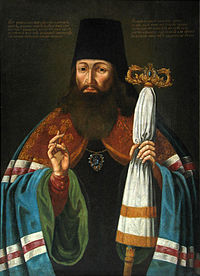
All good is in Me by St. Tikhon of Zadonsk

Do you desire good for yourself? All good is in Me.
Do you desire blessings? All blessings are in Me.
Do you desire beauty? What is lovelier that I?
Do you desire noble birth? What birth is more noble than that of the Son of God and the Virgin?
Do you desire rank? Who is of higher rank than the King of heaven?
Do you desire glory? Who is more glorious than I?
Riches? All riches are in Me.
Wisdom? I am the Wisdom of God.
Friendship? Who is a greater friend than I - I who laid down my life for all?
Help? Who can help but I?
Happiness? Who can be happy without Me?
Do you seek consolation in distress? Who will console you but I?
Do you seek peace? I am the peace of the soul.
Do you seek life? In Me is the fount of life.
Do you seek light? I am the light of the world.